


: [Opinion] A Milestone That Reflects Singapore's Commitment to Quality


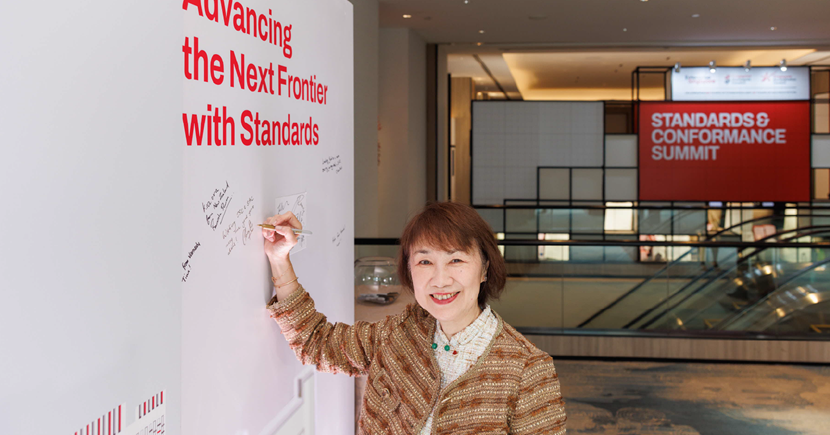
Last week, we celebrated two significant milestones for Singapore's quality infrastructure: 60 years of standards and 40 years of accreditation. It was good to mark the occasion with the many partners, experts and companies who have built this ecosystem with us. For me, the anniversaries are an invitation to reflect on how deliberately Singapore has built something most people rarely think about, but rely on every day.
Standards and accreditation work in the background. They are invisible to the consumer, yet they give us the confidence to use a product as it is, without second-guessing whether it is safe or suitable. That invisible assurance is the mark of a system working exactly as it should.
What I have come to appreciate more deeply over the years is that this infrastructure is not just about assurance. It is one of the foundations of Singapore's economic growth, and one that continues to open doors for our businesses today. Singapore transformed from basic industrialisation to a digital, green economy, with standards and accreditation quietly underpinning the trust that made progress possible at each stage.
How Standards and Conformance Create Real Value for Enterprises
I often describe standards as the rules of the game. They are the common set of expectations that businesses, regulators, and consumers agree to operate by. And knowing those rules well is what allows a business to play the game on its own terms.
Adopting standards takes a real commitment of time and resources. But the businesses that embrace them tend to find the returns outweigh the investment. Standards bring structure to how a company makes products, delivers services and governs its operations, and that structure builds trust with customers, regulators and partners alike.
For companies looking to grow beyond Singapore, this matters considerably. Operating to internationally recognised standards removes a significant barrier to entry in overseas markets. It signals credibility to a buyer who has never worked with you before.
Take Jurong Cold Store, a home-grown cold chain logistics company and the first to be certified under SS 668, our Singapore Standard for handling, storing and transporting chilled and frozen food. Food wastage, once at least 5 per cent, is now close to zero. The certification has helped the company win the confidence of overseas customers, and it is now building a second facility that will double its capacity.
Or take HOPE Technik, whose autonomous mobile robots deliver supplies in hospitals such as Tan Tock Seng Hospital and Changi General Hospital. For robots to move between floors, they must communicate with building lifts, and every deployment once required its own custom integration. SS 713 standardised that data exchange. With the basics agreed upfront, companies spend less time on integration and more time innovating and scaling.
These are not isolated examples. They reflect a pattern we see across Singapore enterprises that have made standards a core part of how they grow.
EnterpriseSG's Role, and the Partners Who Make It Possible
Enterprise Singapore's role is to convene, coordinate, and connect. We work alongside Singapore Standards Council and Singapore Accreditation Council, and with a wide network of partners, to develop standards that reflect genuine needs. Today, around 2,800 experts contribute to our standardisation programme, with another 400 supporting accreditation work. That depth of commitment is what gives Singapore's standards their credibility.
What I am equally proud of is that Singapore does not just adopt global standards. We help shape them. SS 713 is now being elevated to an ISO standard, with countries including Japan, South Korea and Norway interested in participating in its development. When Singapore develops a standard, we are not just solving a local problem. We are helping our companies build early credibility and confidence to participate meaningfully in new markets.
What the Next Chapter Looks Like
The role of standards will only grow in importance. New technologies, evolving business models, and rising expectations around sustainability are creating both complexity and opportunity. Trust will need to be established early in areas such as artificial intelligence and precision medicine. Climate commitments will need to be measurable and verifiable.
This is the thinking behind the Standards and Conformance (S&C) 2035 roadmap, launched by Deputy Prime Minister Gan Kim Yong at our Gala Dinner. The roadmap makes three commitments:
- Support our companies to adopt standards and achieve certification early, particularly in growth sectors such as AI, precision medicine and offshore wind;
- Strengthen the ecosystem behind the standards, including our testing, inspection and certification sector;
- Deepen Singapore's partnerships across regional and international platforms as a trusted quality hub.
The five Memoranda of Understanding we signed over the S&C Gala Dinner and Summit, covering critical and emerging technologies, AI and carbon markets, show what this looks like in practice.
60 years of standards and 40 years of accreditation are a foundation Singapore can be proud of. The work ahead is to help our businesses grow with confidence in an increasingly complex world. That makes this anniversary year not just a moment to look back, but a moment to look forward.
The writer is Director-General of Quality and Excellence at Enterprise Singapore.