


: From ambition to execution: How supply chains will shape offshore wind’s future


First published on RechargeNews on 20 Apr 2026
The offshore wind industry stands at an inflection point. The next decade will see offshore wind capacity grow by 356 GW, enough to power over 300 million households globally, equivalent to all of Europe and the United States combined. According to estimates by industry analyst 4C Offshore1, offshore wind capacity is projected to expand at a compound annual growth rate of 9.1% from 2026 to 2040.
The question is not whether this will happen, but whether supply chains can deliver it. Behind these numbers lies a fundamental question about industrial capacity and supply chain readiness.
The industry has proven its ability to scale. Offshore wind’s journey began over 30 years ago when Denmark commissioned the world’s first offshore wind farm with an initial installed capacity of around 5 MW2, laying the foundations for today’s global offshore wind industry. To date, more than 84GW3 of offshore wind capacity has been commissioned globally, with Europe, China, Japan, and South Korea accounting for a substantial share of installed capacity. Floating offshore wind, which once seemed like a pipe dream, is becoming a reality.
The challenge of building at scale
Turning the projected offshore wind capacity into reality will require far more than ambition; it hinges on effective supply chain execution. To put the challenge in perspective, generating an additional 356 GW of capacity by 2040 would require between 24,000 and 35,000 new turbines, assuming 10-15 MW turbines are used.
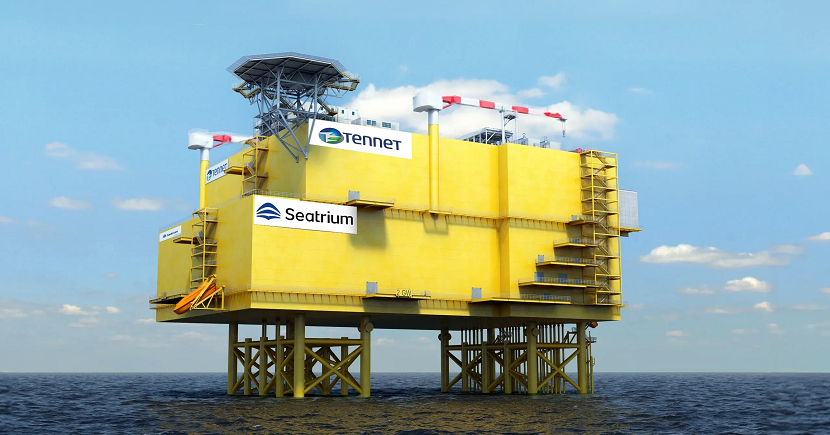
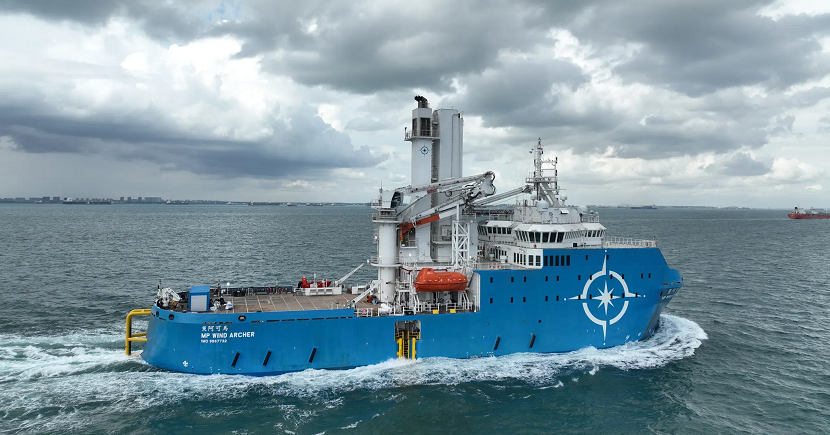
That represents tens of thousands of towers at sea, each with subsea foundations and blades over 100 metres in length, alongside offshore substations and hundreds of thousands of kilometres of inter-array and export cables. It also requires a specialised global fleet from Wind Turbine Installation Vessels (WTIVs) to Crew Transfer Vessels (CTVs) supporting farms over their lifespan of 20 to 30 years.
The supply chain challenge is not just one of scale, but also of cost with raw materials, labour, and component costs rising by 30-50%4 since 2021.
Against this backdrop, the role of enabling partners in the global supply chain becomes increasingly important.
Singapore, powering the windmakers
Known as a safe harbour with calm, low-wind conditions, Singapore has no offshore wind farms of our own. Yet, we are deeply embedded in global offshore wind developments. This demonstrates how countries without wind resources can become essential partners through industrial capabilities.
Singapore offers a continuation of capabilities honed over decades in offshore oil and gas. Without a single oil well, Singapore leveraged its strategic location, marine engineering expertise and integrated ecosystem to become a global hub for rig building and Floating Production Storage, and Offloading conversion. We are now adapting and applying this playbook to offshore wind. The expertise we have built across the value chain – including in hull design, mooring systems, structural integration and deepwater project management – are being dual-purposed to support offshore wind development.
Singapore companies are delivering projects globally. Seatrium has evolved its marine and offshore capabilities to develop offshore substations and offshore wind support vessels such as WTIVs and Heavy Lift Vessels. Collectively, Seatrium’s past and ongoing projects contribute over 16GW of offshore wind substation capacity worldwide. Its track record includes the delivery of its first 300MW offshore wind project for Vattenfall in 2009, and most recently, securing its fourth high-voltage direct current project under TenneT's 2GW programme: the BalWin5, a next-generation 2.2 GW offshore converter platform that is among the largest of its kind in the world.
Aluminium vessel builders like Penguin International and Strategic Marine, drawing on years of experience serving the oil and gas sector, are now constructing CTVs for the offshore wind industry. Penguin’s WindFlex-27 vessel has been deployed in the North Sea to support offshore wind operations, and Strategic Marine has likewise delivered Z-Bow vessels to support such operations in Taiwan.
Building bridges and partnerships
We believe supply chain collaborations play a critical role and the key lies in investing in local communities. Marco Polo Marine exemplifies this commitment to the local communities in its operations in Taiwan, where the company is employing nearly 100 staff and crew members through its subsidiary PKR Offshore. Today, they operate a fleet of seven vessels, demonstrating deep commitment to the local communities.
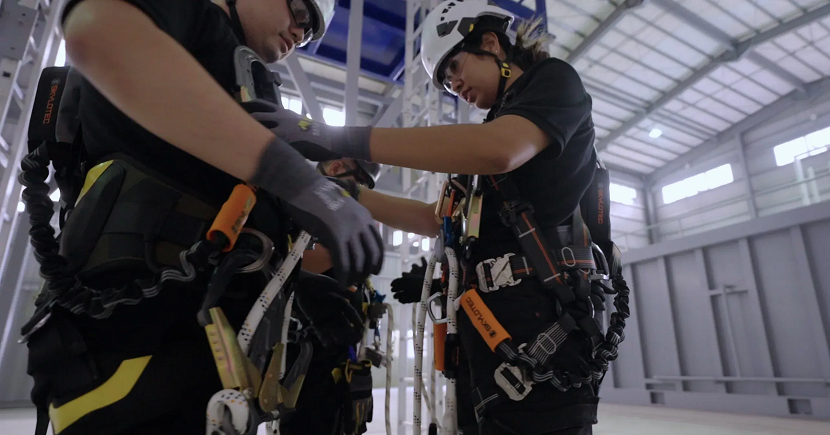
Singapore companies such as Sheffield Green are also contributing to local talent development, working with Vestas on training programmes for local personnel in Taiwan and potentially across Asia-Pacific. These efforts help equip local communities with the skills needed to participate in offshore wind projects, while building a scalable workforce pipeline to support the industry’s growth.
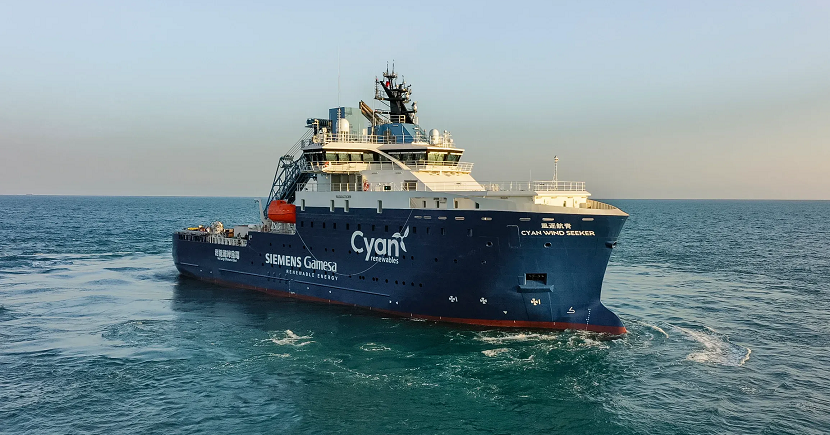
The same philosophy underpins Cyan Renewables’ recent collaboration in South Korea. Together with Danish logistics leader Blue Water Shipping and South Korean conglomerate LX International, Cyan signed a memorandum of understanding to invest in a dedicated offshore wind marshalling port in Dangjin.
The 200,000-square-metre facility will feature deep-water berths designed for next-generation installation vessels, supporting South Korea's offshore wind pipeline, while incorporating local knowledge transfer and workforce development based on Europe's proven Port Esbjerg model.
RECHARGE Wind Power Summit 2026 Asia Pacific held in Singapore
It is in this spirit of building collaborations that we are excited to partner with Hamburg Messe und Congress and DN Media Group to bring the RECHARGE Wind Power Summit 2026 Asia Pacific to Singapore from 19 to 20 May 2026. The timing is significant: the region is projected to deliver approximately half of the 356 GW of new offshore wind capacity expected by 2040. By convening policymakers, developers, and supply chain leaders, the summit is a platform where partnerships for the next phase of offshore wind can be forged. Enterprise Singapore is actively facilitating these partnerships, working with companies to identify collaboration opportunities that will drive the industry forward.
These partnerships will be crucial because the future of offshore wind, and the wind industry at large, depends not only on ambition, but on effective execution. The winds may blow locally, but the industry that enables them must be global, Singapore stands ready to collaborate with partners to build the future of offshore wind's supply chains together.
- 1 - 4C Market Overview Report Q4 2025
- 2 - Tethys: Vindeby Offshore Wind Farm | Tethys
- 3 - 4C Market Overview Report Q4 2025
- 4 - https://www.bcg.com/publications/2025/offshore-wind-industry-update