


: From Singapore to Europe: Powering the Offshore Wind Buildout Together


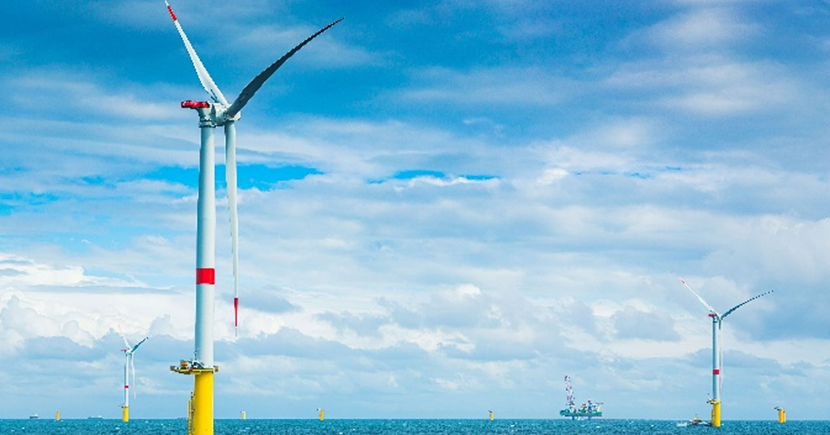
Europe continues to advance its offshore wind ambitions. At the North Sea Summit in Hamburg in January 2026, nine North Sea countries agreed to work towards 300GW of offshore wind capacity by 2050. Across Europe, more projects are also moving ahead, with new capacity awarded in markets such as the UK and Poland.
But setting the target is one thing. Building all that capacity, and keeping it running for decades, is another. Offshore wind farms need substations to bring power ashore, specialised vessels to move people and equipment, technologies to inspect what lies beneath the waves and, increasingly, new solutions that can take wind farms into deeper waters.
Some of that work is already being supported from thousands of kilometres away, in Singapore.
Singapore may not have offshore wind farms of its own, but it has decades of experience building and supporting for the marine and offshore sector. Today, Singapore companies are putting that know-how to work with European partners.
Building the infrastructure behind Europe's wind farms
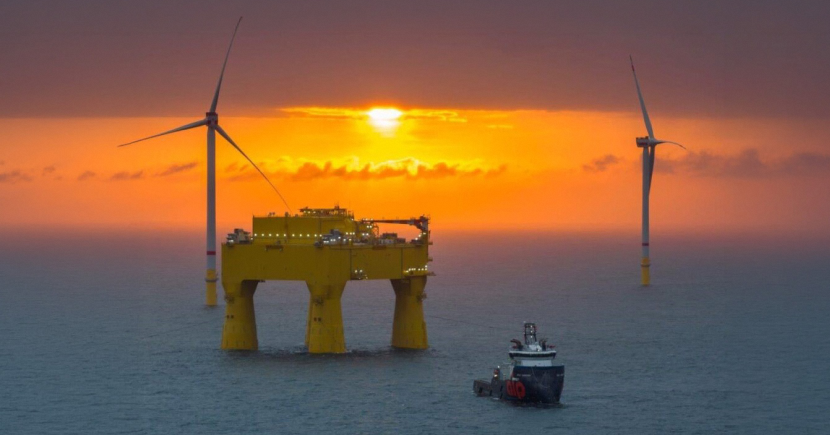
One of the clearest examples sits out in the German North Sea. Standing around 30 storeys high and weighing 27,000 tonnes, the DolWin5 offshore substation is hard to miss.
Delivered by Singapore-headquartered Seatrium, the High-Voltage Direct Current (HVDC) platform helps carry up to 900MW of electricity generated offshore back to the onshore grid. And DolWin5 is not a one-off project. Seatrium and its partner are now working on another four larger offshore substations under TenneT’s 2GW programme. Alongside earlier projects, Seatrium will deliver over 16GW in offshore wind substation capacity that could power over 20 million households – a majority for the Europe market.
Apart from installation vessels and transmission assets that underpin the offshore wind backbone, Seatrium is also investing in its services capabilities within the European ecosystem. With the establishment of an operations hub in Lowestoft, UK to support the long-term operations and maintenance of these giant offshore substation structures, Seatrium is investing to develop local expertise to support its customers.
Keeping offshore wind farms moving
Getting a wind farm built is only part of the story. Once the turbines start turning, they need to keep turning, often for decades, and in some of the toughest conditions at sea.
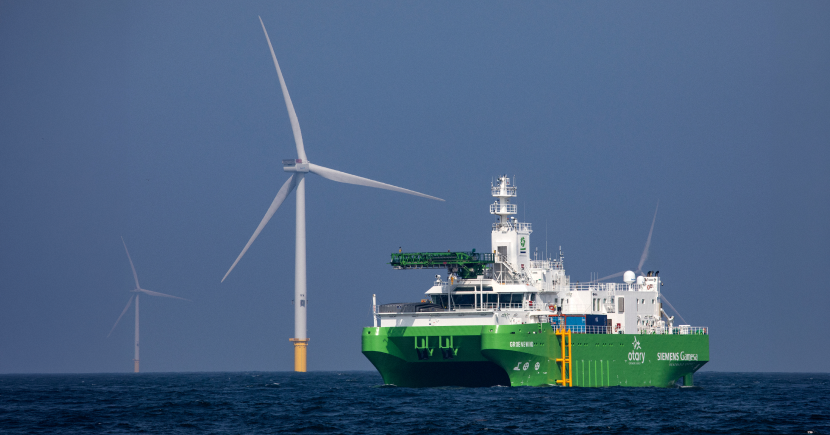
That is where another group of Singapore companies comes in. Vessels are doing the everyday work of getting technicians safely out to turbines. Singapore-headquartered Cyan Renewables operates the Groenewind Service Operation Vessel (SOV), supporting Siemens Gamesa in maintaining the turbines of three Belgian offshore wind farms under a 17-year arrangement. This initial European collaboration paved the way for a larger follow-on deal announced in early 2024, where Siemens Gamesa awarded Cyan a 15-year charter contract for its first newbuild SOV in Asia (Cyan Wind Seeker) to service the Hai Long offshore wind farm in Taiwan.
Strategic Marine has also delivered two StratCat 27 crew transfer vessels to Louis Dreyfus Armateurs for use in the French and wider European offshore wind sector and six supa swath crew transfer vessels to UK operator Mainprize Offshore Group in 2026. This demonstrates how Singapore companies are becoming reliable long-term partners to the offshore wind industry.
Not all the work is visible above the water. At Germany's Nordsee One and Deutsche Bucht wind farms, Singapore company BeeX deployed their autonomous underwater drones in strong North Sea currents, gathering information on the structural integrity of wind farm foundations. Their station-keeping drones gathered high-resolution sonar, visual, and 3D inspection data of underwater infrastructure without the large supporting motherships typically required for conventional remotely operated vehicles, validating a sustainable inspection model that is more reliable, less costly, and lower in emissions.
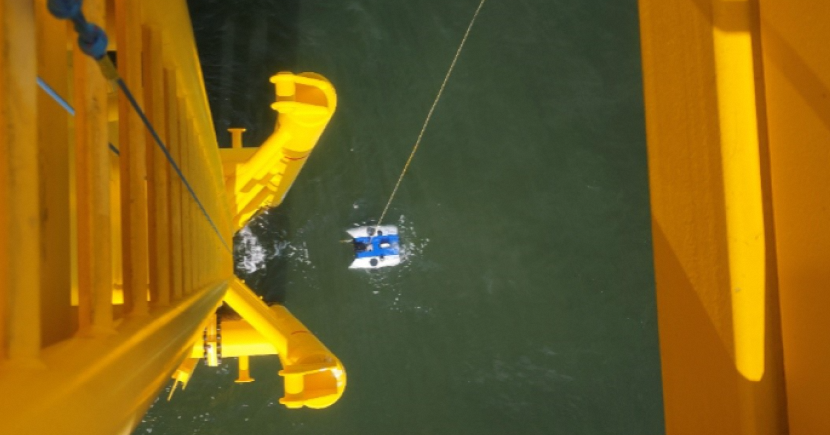
Taken together, Singapore companies are working alongside European partners over the life of wind assets and, in BeeX's case, proving new technologies in real-world conditions.
The next frontier in floating offshore wind
As Europe ventures into deeper waters, Singapore companies are helping to shape the next chapter of floating offshore wind.
One example is the 30 MW EolMed floating wind project off the coast of France, where Singapore's Mooreast supplied its proprietary MA5S drag anchors to secure the floating wind turbines.
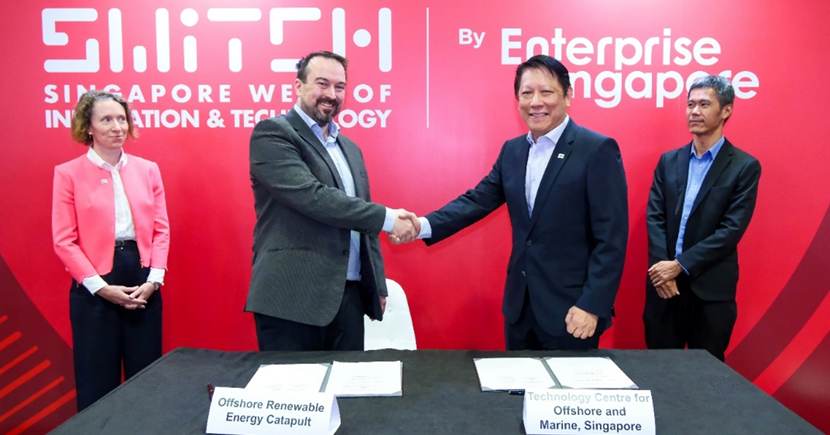
Collaboration also extends from industry into R&D on floating offshore wind technologies. In October 2025, Singapore's Technology Centre for Offshore and Marine, Singapore (TCOMS) and the UK's Offshore Renewable Energy Catapult signed a partnership to advance floating offshore wind. Together, they have identified areas for joint-development of capabilities such as digital twins, virtual testing, and AI-enabled engineering to help accelerate the design and validation of floating wind systems. The collaboration also seeks to bring together companies from both countries on joint innovation projects, helping promising technologies move from research into real-world application.
Connecting Europe and Asia-Pacific
The story does not end in European waters. Stronger links are being built between Europe's established offshore wind industry and a growing market in Asia-Pacific.
Europe brings decades of experience developing and operating offshore wind at scale. Asia-Pacific, meanwhile, is emerging as an important part of the industry's future. Singapore sits between these opportunities as a place where companies, technology partners and industry players from both regions can meet, collaborate and explore new markets.
That connection will become more visible with WindEnergy Hamburg expanding its international footprint into Singapore. WindEnergy Asia-Pacific powered by RECHARGE will take place in Singapore in 2027 and 2029, as part of a broader collaboration between Hamburg Messe und Congress, DN Media Group (RECHARGE), Enterprise Singapore and the Singapore Tourism Board on a series of wind energy conferences and exhibitions.
Building on the RECHARGE Wind Power Summit 2026, WindEnergy Asia-Pacific 2027 will bring policymakers and industry leaders together for policy dialogues, partnerships and collaborations needed to accelerate wind energy deployment across the region.
As offshore wind grows, the opportunities to build, test and bring new solutions to market together are growing too. Meet the Singapore delegation at WindEnergy Hamburg, 22–25 September 2026, and join us at WindEnergy Asia-Pacific in Singapore, 25–27 May 2027.