


: Carving Singapore's niche in precision medicine


First published 27 Nov 2025
From research spin-offs to globally validated solutions, home-grown start-ups are earning recognition worldwide, powered by Enterprise Singapore, world-class research infrastructure and savvy investors
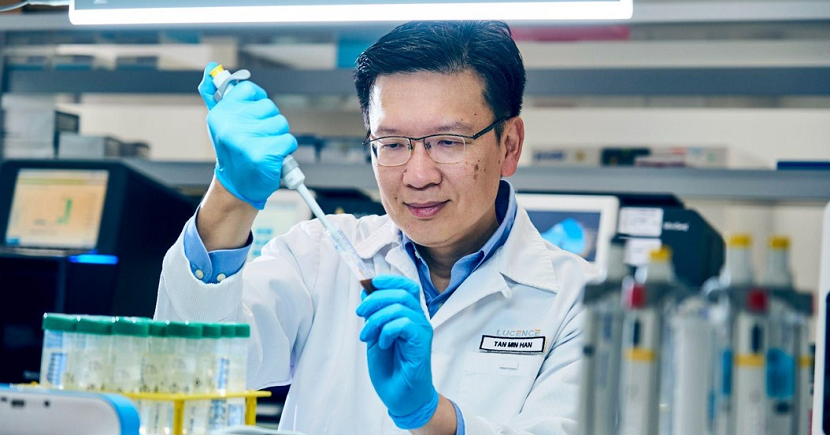
At the start of 2025, Singapore biotech start-up Lucence quietly reached a global milestone. The company, which develops non-invasive blood tests for cancers, announced a collaboration with Mayo Clinic Laboratories in the United States to make its tests available to more patients around the world.
The partnership is significant. Mayo Clinic Laboratories is the global reference lab of the Mayo Clinic. The deal follows Lucence’s landmark 2023 achievement: becoming the first Asia-based healthcare services provider to receive US Medicare approval, and later, coverage by US insurers.
Lucence founding CEO and medical director Dr Tan Min-Han says: “Healthcare is a high-trust environment so it’s truly something that we’re proud of that our work is recognised by the world's number one hospital.”
The company's tests, which detect multiple cancers from a single blood draw, are now available across Asia, the Middle East, Europe and North America – enabling doctors screen for 50 cancers and select the right treatments.
Two months after Lucence’s Mayo partnership, another Singapore start-up, Kyan Technologies, announced that its drug sensitivity platform would also be used by Mayo Clinic Laboratories to help clinicians tailor treatment plans for oncology.
Kyan Technologies specialises in functional precision medicine, using patient-derived cells to test how individual cancers respond to different drugs – helping doctors choose the most effective option faster.
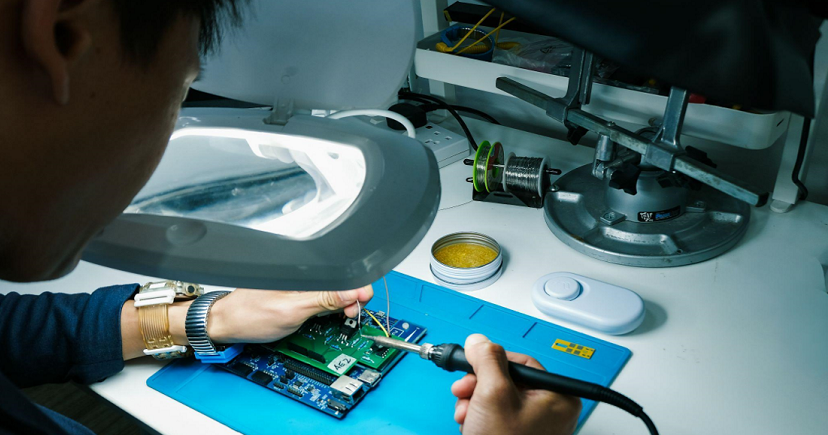
These milestones reflect a broader shift in healthcare – one that is moving away from a “one-size-fits-all” model to more personalised care. Precision medicine uses a person's genetic makeup, environment and lifestyle to guide prevention, diagnosis and treatment.
Globally, the precision medicine market is valued at about US$119 billion (S$154.7 billion) in 2025, and is projected to nearly quadruple to US$470.5 billion by 2034, with the Asia-Pacific region expected to see the fastest growth over the next decade.
Dr Clarice Chen, director of Healthcare & Biomedical at Enterprise Singapore (EnterpriseSG), says: “EnterpriseSG is seeing a growing pool of Singapore start-ups with innovative solutions that can contribute to the global precision medicine industry.
“To grow this pool of start-ups, we work closely with them in their development journey and facilitate access to international markets and connections so that they can scale and achieve wider commercialisation.”
Built over time
Singapore’s rise in precision medicine is the result of two decades of steady investment in biomedical research, talent, infrastructure and regulation – supported by both government and private capital.
EnterpriseSG has played a role in helping start-ups translate deep science into practical healthcare solutions.
It is no coincidence that three of Singapore’s best-known innovators – Lucence, Aevice Health and HistoIndex – first began in local research institutions.
Lucence spun out of A*Star in 2016, where Dr Tan had led a cancer genetics lab from 2011. Aevice Health, which develops AI-powered stethoscopes, emerged from Nanyang Technological University (NTU) in the same year. HistoIndex, also a spin-off from A*Star, offers digital pathology tools used by major pharmaceutical companies.
Aevice Health’s founder and CEO Adrian Ang says: “When we first spun out of NTU, our technology was not yet mature enough for commercialisation.” EnterpriseSG’s Startup SG Tech grant in 2018, combined with angel funding, enabled Aevice to hire engineers and transform a prototype into a viable product.
The result? AeviceMD, the world's smallest smart wearable stethoscope cleared by both the US Food & Drug Administration (US FDA) and Health Sciences Authority of Singapore.
The device detects abnormal lung sounds and enables remote monitoring for patients – and is now used in hospitals in the US and Singapore, with expansion underway in Japan.
EnterpriseSG also helped connect Aevice Health to Cedars-Sinai Medical Center in the US, which later invested in the company’s Pre-Series A round in 2024.
Specialising in imaging solutions for visualising and quantifying fibrosis in biological tissues, HistoIndex, meanwhile, received early support from both A*Star and EnterpriseSG.
Recently, it also raised $9 million in a round led by OCBC – the bank’s first medtech investment. The company is now validating its diagnostic tests in collaboration with the Mayo Clinic.
Its CEO Gideon Ho says: “That connection accelerated multi-site clinical validation studies and helped us pursue our lab-developed tests in the US and Europe.”
As companies like these gain global traction, EnterpriseSG continues to work with multi-national corporations and healthcare partners to build a pipeline of breakthroughs.
JLabs is one such example. Launched in Singapore in 2023, the global incubator network helps early-stage companies accelerate the development of their innovative medicines, medical technologies and healthcare solutions into viable solutions.
It has incubated over 1,000 companies globally, with more than 40 of those based in Singapore going on to raise in excess of US$170 million since joining the network.
"To bring their innovations to the world, Singapore start-ups need to navigate market complexities and regulatory hurdles," says EnterpriseSG’s Dr Chen. "We support this by creating pathways that connect them with global corporations and healthcare institutions, empowering them to develop commercially viable solutions that meet global healthcare needs."
If infrastructure and talent built the foundation, capital – and global access – is driving growth.
Daphne Teo, co-founder of Engine Biosciences – a company applying machine learning to genomics for drug discovery – knew early that cost was a major barrier for biotech start-ups. Setting up a biosafety level 2 (BSL-2) lab, which handles viruses that pose moderate hazards, could cost millions.
In 2019, she founded NSG BioLabs, Singapore’s first and largest co-working BSL-2 certified wet-lab facility, with support from EnterpriseSG.
NSG BioLabs now houses more than 60 companies, including multi-national biotech companies and home-grown start-ups.
Drawing global interest
The growing capital pool is also drawing global investors. Temasek-backed ClavystBio was launched in 2022 to accelerate life science breakthroughs. It also regularly co-invests with EnterpriseSG’s SEEDS Capital, now known as SG Growth Capital.
ClavystBio has invested in more than 15 companies across digital health, medtech and therapeutics. In May 2025, one of its portfolio companies, Nuevocor, successfully raised US$45 million in Series B funding from life sciences investors from Europe and the US.
ClavystBio also co-invested in Engine Biosciences’ US$27 million Series A extension led by Polaris Partners in 2023. That round included Coronet Ventures, the international investment arm of Cedars-Sinai Intellectual Property Company, which set up its first overseas office in Singapore in August 2023 – supported by EnterpriseSG.
CEO of ClavystBio Dr Khoo Shih says: “Capital is important but it’s not enough. It’s really access to the global networks, the global talents and then the global capital that will help our Singapore start-ups continue to scale and grow.”
EnterpriseSG continues to raise visibility for Singapore start-ups, actively participating in major international events such as Biocentury, Asia Bio Partnering Forum, BIO International Convention, giving start-ups opportunities to build relationships and strike deals.
These efforts support what Lucence’s Dr Tan sees as Singapore’s broader ambition: to become the services hub of global precision medicine.
He says: “By becoming a leading healthcare hub, Singapore is helping both Singaporeans and patients worldwide live healthier and longer lives.”
That ambition is taking shape. Recent IPOs by Prestige Biopharma, Curiox Biosystems and Mirxes reflect the growing maturity of Singapore’s biomedical sciences sector, with companies raising funds to reach commercial milestones and drive expansion.
Dr Khoo adds: “Our start-ups are truly going for something that’s unique, differentiated and novel, that serves global medical and healthcare needs – that is the combination that will continue to sustain and fuel our goals.”
Learn about how Enterprise Singapore is growing industries and uncovering new opportunities for home-grown businesses.
Source: The Business Times © SPH Media Limited. Reproduced with permission.