


: Singapore’s role in Asia Pacific’s Offshore Wind Ecosystem


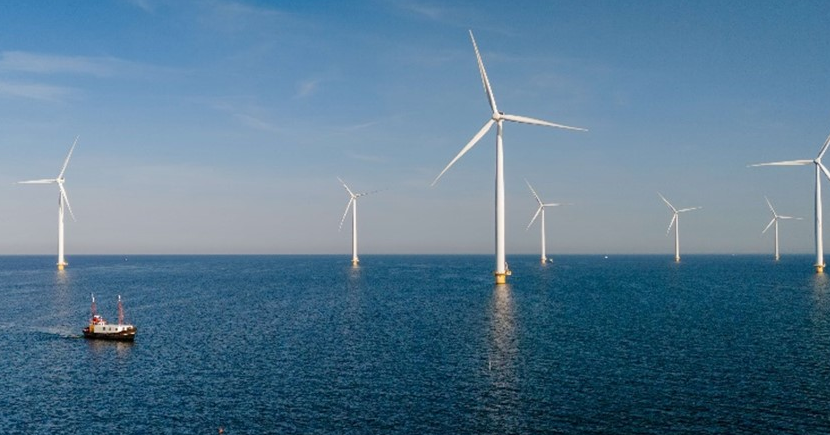
From offshore engineering to underwater robotics, Singapore companies are helping support offshore wind projects across Asia Pacific
Offshore wind is gaining momentum across the region as countries look for cleaner ways to meet growing energy demand. Unlike wind farms built on land, offshore wind projects are located at sea, where wind speeds are often stronger and more consistent. These projects can generate large amounts of electricity while supporting countries in their transition towards lower-carbon energy sources.
But what most people do not see is everything happening behind the scenes.
Building and operating an offshore wind farm involves far more than turbines at sea. It requires engineers, marine operators, specialised vessels and subsea teams working together across different stages of the project – and many of these capabilities already exist in Singapore.
An industry evolving alongside Asia Pacific’s energy transition
Singapore may not have offshore wind farms of its own, but it has long supported the global industry through areas such as marine engineering, offshore infrastructure and specialised vessel operations.
Today, that experience is being put to work on offshore wind projects across Asia.
Companies that once built infrastructure for offshore oil and gas projects are now supporting offshore substations, floating wind technologies and specialised vessels for offshore wind operations.
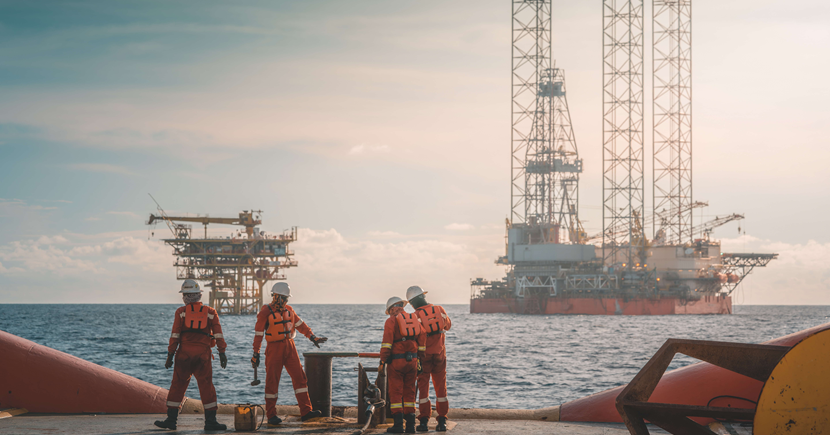
Singapore’s Marine & Offshore Energy sector now includes more than 1,000 establishments – from shipyards and equipment makers to builders, owners and operators of specialised vessels. Through the Association of Singapore Marine & Offshore Energy Industries (ASMI), industry players are also working collectively to strengthen capabilities in offshore renewables and maritime decarbonisation.
Reinventing offshore capabilities for a new energy future
As offshore wind projects grow in scale across the region, Singapore companies are increasingly taking on work across multiple markets, bringing decades of offshore engineering experience to a new generation of energy projects.
Seatrium has evolved its marine and offshore capabilities to develop offshore substations and offshore wind support vessels including wind turbine installation vessels and heavy-lift vessels. Seatrium's track record and ongoing projects will contribute over 16GW of offshore wind substation capacity, equivalent to powering 20 million homes. These include early projects in the UK such as its first 300MW offshore wind project for Vattenfall in 2009, as well as major global offshore wind developments including Hornsea 2 (1.4 GW). Seatrium most recently secured its fourth HVDC project under TenneT's 2GW programme – the BalWin5, a next-generation 2.2 GW offshore converter platform that is amongst the largest of its kind in the world.
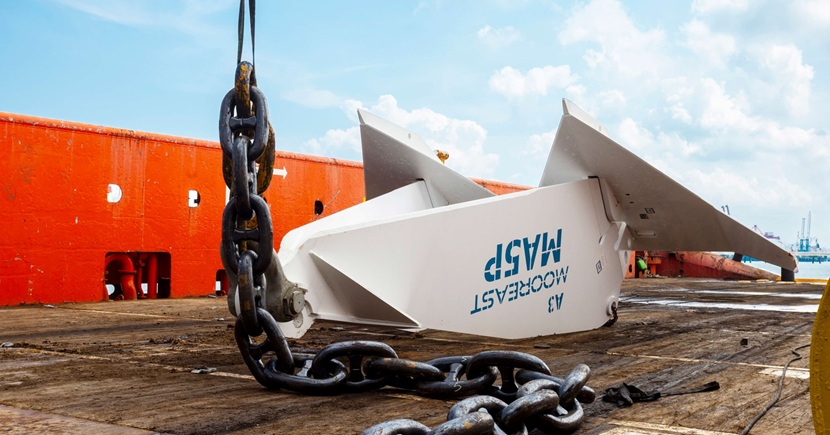
Mooreast is supporting floating offshore wind through mooring systems that keep floating platforms stable at sea, with technologies deployed on demonstration projects in Japan, including the early Fukushima Forward project. Since then, Mooreast has undertaken several green energy projects on behalf of the Japanese government, including a floating wind and current hybrid power generation system with offshore and marine (O&M) company MODEC, as well as a floating wind project in Kitakyushu for Japan’s New Energy and Industrial Technology Development Organisation (NEDO).
Singapore companies are also supporting offshore wind projects at the early development stage, providing critical site assessment, geotechnical investigation, and seabed survey services. Geonamics provides marine soil investigation, geotechnical laboratory testing and foundation testing for offshore energy and critical infrastructure across Singapore, Malaysia and ASEAN. With over a thousand marine investigation boreholes completed, Geonamics delivers trusted ground and seabed data for safe design, construction and foundation verification.
SA Geolab specialises in advanced soil testing, which unearths crucial data for geotechnical investigations for offshore wind farms. SA Geolab opened a geotechnical laboratory in Myeongji district, Busan-Korea in collaboration with BJFEZ Authority (Busan-Jinhae Free Economic Zone) and Busan Metropolitan City. The 22,000 square feet laboratory will feature all the relevant testing required to investigate the soil behavior at the sites of offshore wind farm development in South Korea.
For many Singapore companies, offshore wind is becoming a natural extension of what they already do well, and increasingly, that extends to the technologies shaping how these farms are built and maintained.
Supporting offshore wind from planning to operations
As offshore wind projects grow larger and move into deeper waters, technology is playing an increasingly critical role – and Singapore’s research and industry community is at the forefront.
At the Technology Centre for Offshore and Marine, Singapore (TCOMS), researchers and industry partners work together to develop and test technologies for challenging offshore environments. Its ocean basin can simulate powerful waves and ocean conditions, allowing companies to test offshore systems before deployment. The facility also supports work on floating offshore wind technologies and digital simulation tools that help improve system performance and reduce technical risks.
At sea, autonomous technologies are also changing how offshore wind farms are maintained. 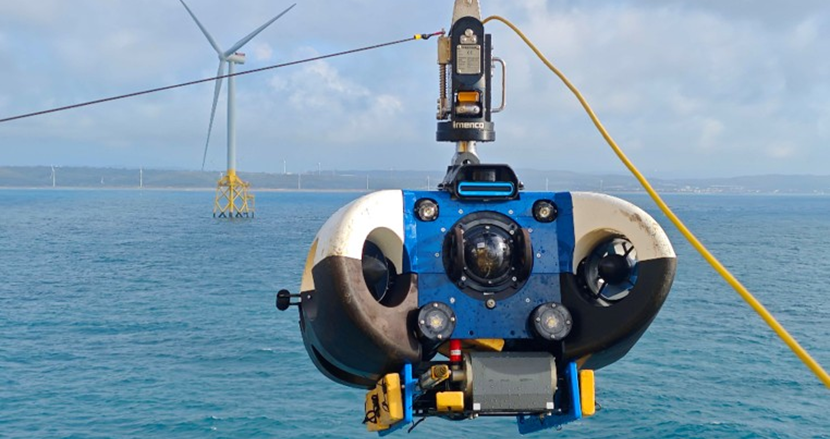
Singapore company, BeeX, uses autonomous underwater vehicles to inspect subsea structures at offshore wind farms, helping operators reduce manpower, eliminate large vessels for launch-and-recovery, and improve inspection efficiency. At offshore wind farms in Europe and Asia, BeeX has deployed its autonomous underwater drones to inspect subsea structures including foundations and inter-array cables beneath the sea surface across multiple wind turbines. Compared to traditional Work-Class Remotely Operated Vehicle (WROV) operations, these autonomous systems achieved more than 50% cost savings and enabled more scalable and sustainable inspection campaigns for offshore asset owners.
These technologies may not always be visible, but they are becoming an essential part of how offshore wind farms operate safely and efficiently.
Looking ahead
Offshore wind is scaling rapidly across Asia, and the opportunities are only expanding.
For Singapore companies with deep experience in offshore engineering, marine operations and subsea technologies, this translates to real cross-border opportunities - whether in the fabrication of foundations and substations, deploying specialised installation vessels, or delivering inspection, maintenance and repair services across project lifecycles. As an established regional hub for engineering, logistics and finance, Singapore is also well positioned to serve markets across the region as the industry grows.
Our companies are not just participating in this expansion, they are helping to shape it. Even as offshore wind farms are built far from Singapore’s shores, the technologies, vessels and expertise supporting them are increasingly connected to Singapore’s offshore ecosystem. Together with partners, Singapore is playing its part in building the future of offshore wind’s supply chains.
Singapore is also taking a significant step towards its ambition to become the leading offshore wind hub in Asia Pacific. Enterprise Singapore and the Singapore Tourism Board have partnered with RECHARGE and Hamburg Messe und Congress to bring a series of wind energy conferences and exhibitions to Singapore from 2026 to 2029, including the RECHARGE Wind Power Summit Asia-Pacific and the flagship WindEnergy Asia-Pacific 2027 and 2029. The events will bring together global industry leaders, policymakers, financiers and supply chain players — marking WindEnergy's first expansion outside Europe.